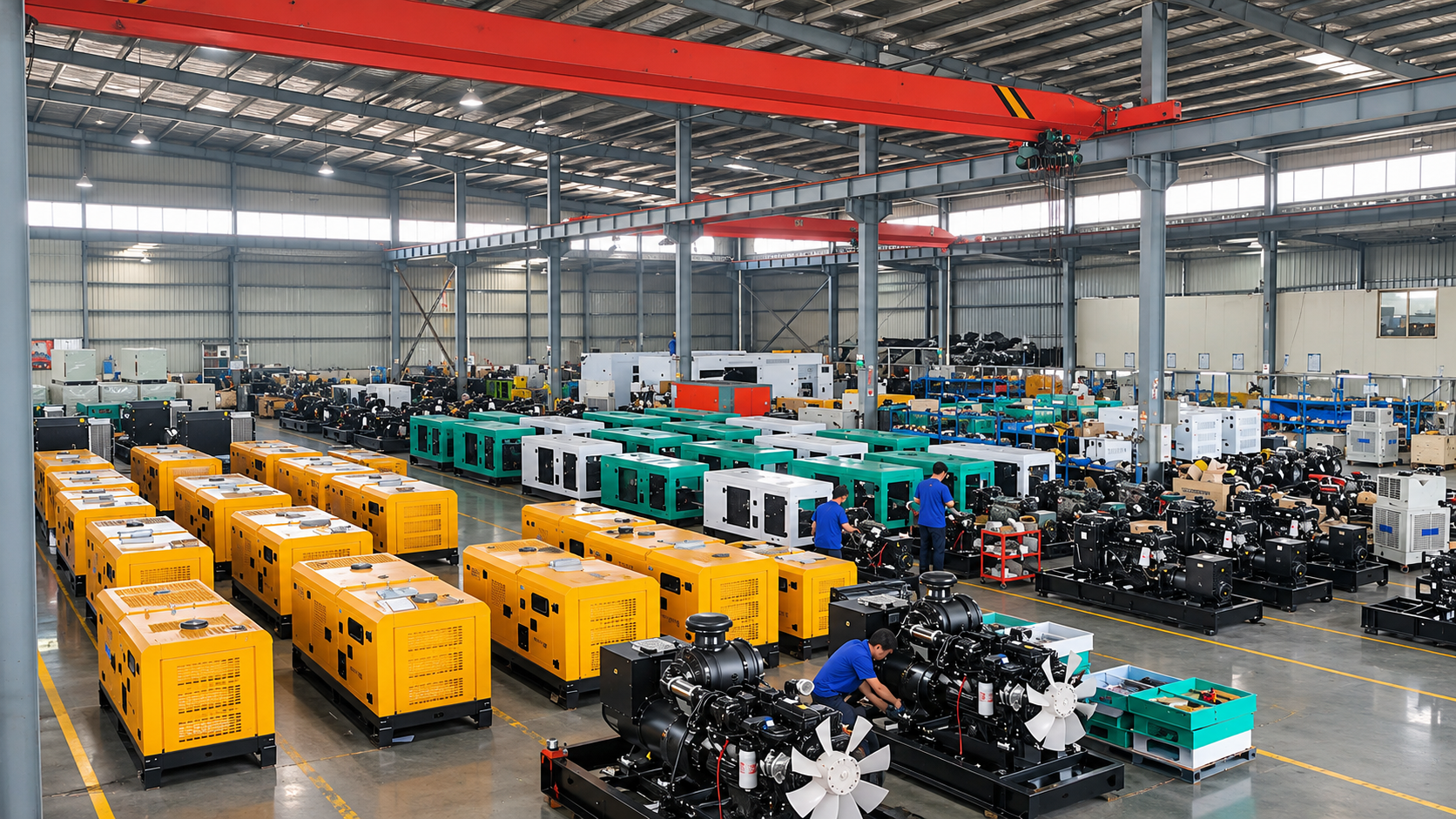
A Batch of Gensets, Each with Its Own Fuel, Is on Its Way to Southeast Asia
A batch of generator sets has completed final testing and is now on its way to our distributor in Southeast Asia. What these units share is simple: none of them plan to live on diesel alone.

Some are configured for natural gas. Some for methane. Some for palm oil blend. Some for kerosene blend. When the shipment arrives, the distributor matches each unit to what’s actually available and affordable on the ground.
The reason for this mix is straightforward: Southeast Asia’s fuel math is being recalculated.

Diesel prices have pushed customers to the edge. Since the start of 2026, diesel prices across Southeast Asia have risen sharply, with retail increases of over 80% in Laos, the Philippines, Vietnam, and Cambodia, and Thailand’s diesel briefly hitting 50 baht per liter. Malaysia and Indonesia have held retail prices down through subsidies, but the fiscal pressure is mounting. Customers aren’t refusing diesel on principle—they’re feeling the cost every time they fill up.

Natural gas remains a large part of the region’s foundation. Global Energy Monitor data shows roughly 106 GW of gas-fired capacity under development across Southeast Asia, alongside about 70 million tons per year of LNG import capacity in the pipeline. Malaysia has over 10 GW in development, with 5 GW already under construction. Vietnam’s LNG import development scale grew from 25.9 million tons to 35.8 million tons in a year. Natural gas will remain one of the region’s primary transition fuels for a long time. Our gas-configured units are aimed at customers with pipeline or LNG supply access.

The case for palm oil blend rests on policy, not sentiment. Indonesia’s B40 mandate is running, with B50 scheduled for July 2026 despite technical and infrastructure delays. Malaysia raised its transport blend from B10 to B12 in April and announced a B15 target. Thailand subsidizes B20 to keep it cheaper than unblended diesel. Palm oil methyl ester has an established track record in Southeast Asian diesel engines; customers don’t need hardware modifications to use it. Where diesel is expensive and palm-derived fuel is available, the arithmetic works.
Kerosene blend serves a different set of conditions. Remote mining sites, island power, oil and gas field operations—places where diesel logistics are costly and supply is uncertain. A kerosene blend configuration offers a middle path, giving the genset one more option for fuel sourcing.
Beyond these, two other fuel configurations have real traction in the region, and we’ve included them in this shipment.
Biogas. Southeast Asia’s biogas power capacity reached 6.9 GW in 2025, with 1.2 GW of new additions expected in 2026; Indonesia, Thailand, and Vietnam account for over 70% of the market. Indonesia requires large palm oil mills to install biogas recovery, and Thailand offers an additional subsidy of $0.075 per kWh for biogas power. Palm oil mill effluent, livestock waste, food processing wastewater—waste that previously cost money to treat can be digested and fed directly into a generator. For the customer, the math is simple: the cost of waste treatment becomes electricity.
Biomass gasification. Rice husks, wood chips, palm kernel shells are gasified into syngas and fed into gas engines. Agricultural by-products in Southeast Asia are scattered but abundant. Gasification units tolerate feedstock variation reasonably well, making them suitable for plantations and remote processing sites where the grid is thin but the feedstock is close at hand.
What we’re doing is plain: putting the fuel choice in the hands of the distributor and the customer. Every unit in this batch was commissioned against its designated fuel type before dispatch. The distributor arrives on site, sees what fuel the customer has, what it costs, and what’s reliable, and recommends the matching machine. No betting an entire inventory on one fuel type. No expecting one genset to do everything.
We can’t control oil prices. But making sure each genset eats the meal it was built for—that saves real money.